New roofs and re-roofing in Greater Manchester

When a roof has reached the end of its life, patching it only buys time. Jon strips it back, checks the timbers, and puts on a new roof with fresh membrane, battens and tiles, finished with dry fixed ridges and hips.

  • 5.0 on Google (49 reviews)
  • FMB member
  • On Checkatrade
  • City and Guilds qualified

When a roof needs replacing, not repairing

A repair makes sense when the damage is in one place. A new roof makes sense when the problems are everywhere: tiles slipping all over, felt that has rotted away, battens that have gone soft, or a roof that keeps leaking in new places after every repair. If you are not sure which you need, a roof inspection will tell you.

Common signs it is time:

  • lots of slipped, cracked or missing tiles or slates
  • daylight showing through the roof from the loft
  • old felt that is torn, brittle or sagging between the rafters
  • damp patches or leaks in more than one place
  • a ridge or hips that keep coming loose
  • a roof that dips or sags

What a re-roof involves

The photos on this page show it step by step:

  1. Scaffold up. Safe access all round the roof, so the work can be done properly and the site stays safe.
  2. Strip the old roof. Old tiles or slates, battens and felt come off, one section at a time, and the waste is taken away.
  3. Check the timbers. With the roof open, the rafters and boards are checked, and any rotten or damaged timber is pointed out to you before it is replaced.
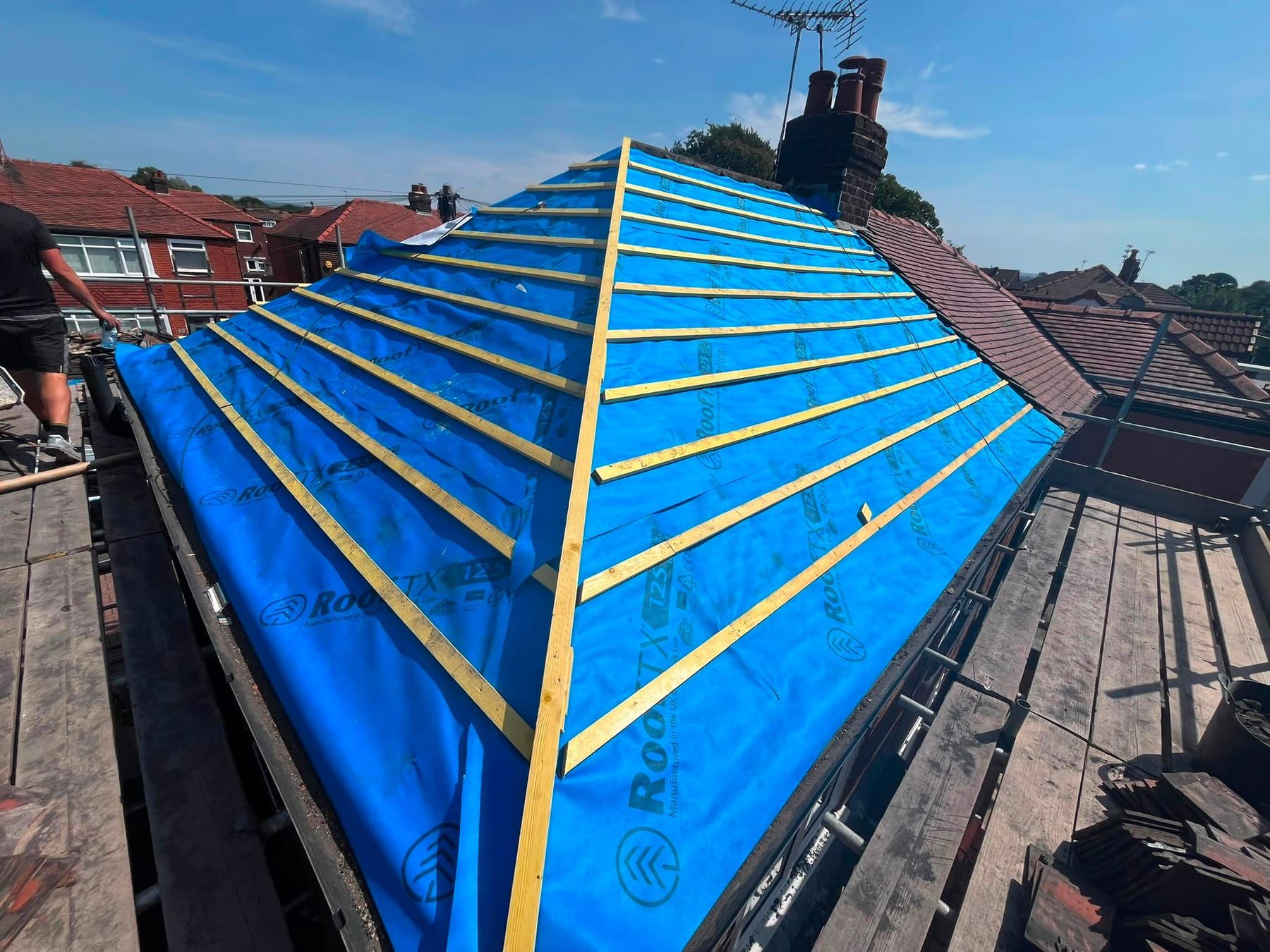
  4. New membrane. A breathable membrane goes on, the blue layer you can see in the photos. It keeps water out and lets moisture escape from the loft.
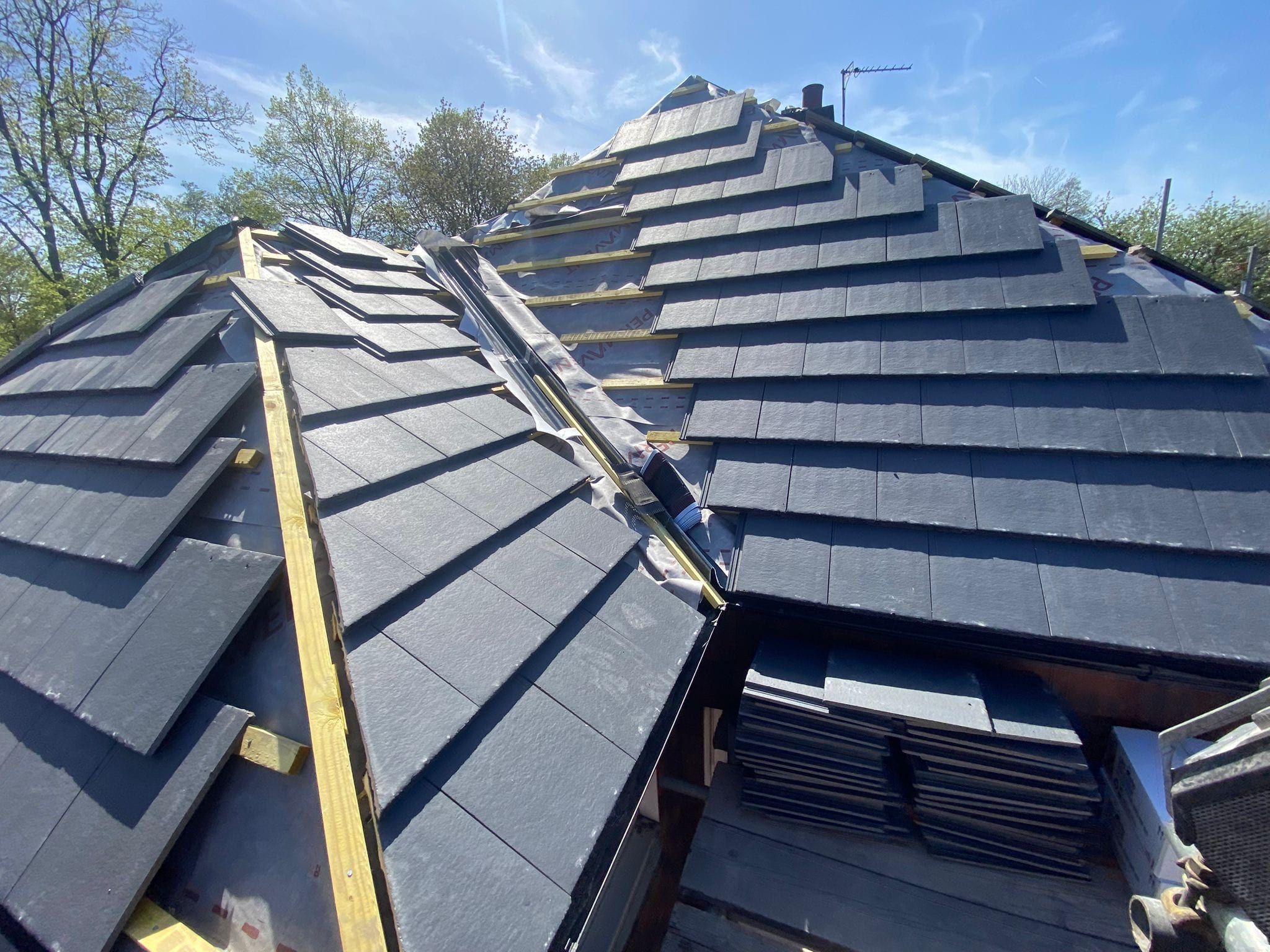
  5. New battens. Fresh treated battens are fixed at the right spacing for the tiles.
  6. New tiles or slates. The new covering is laid and fixed, working up the roof.
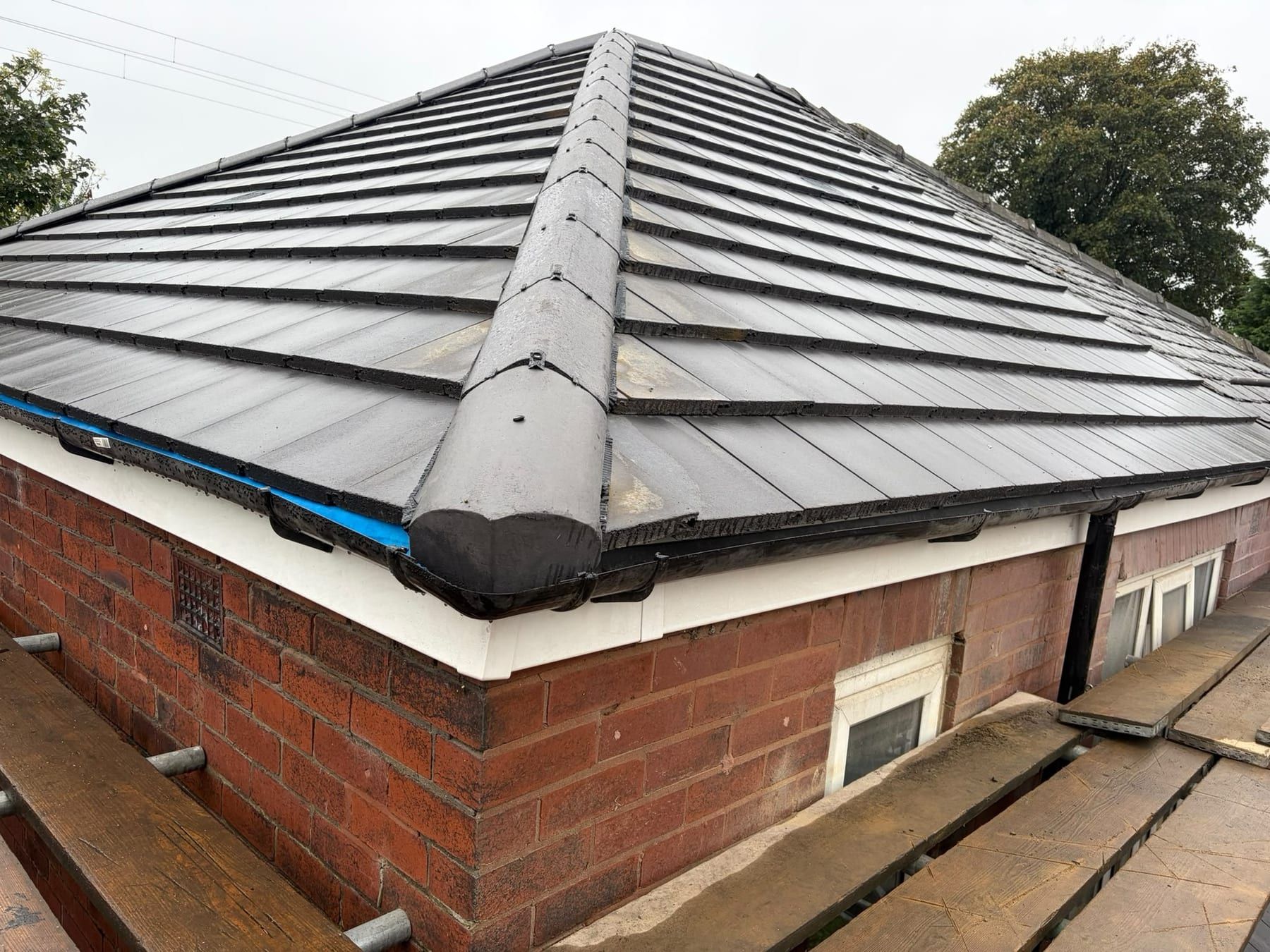
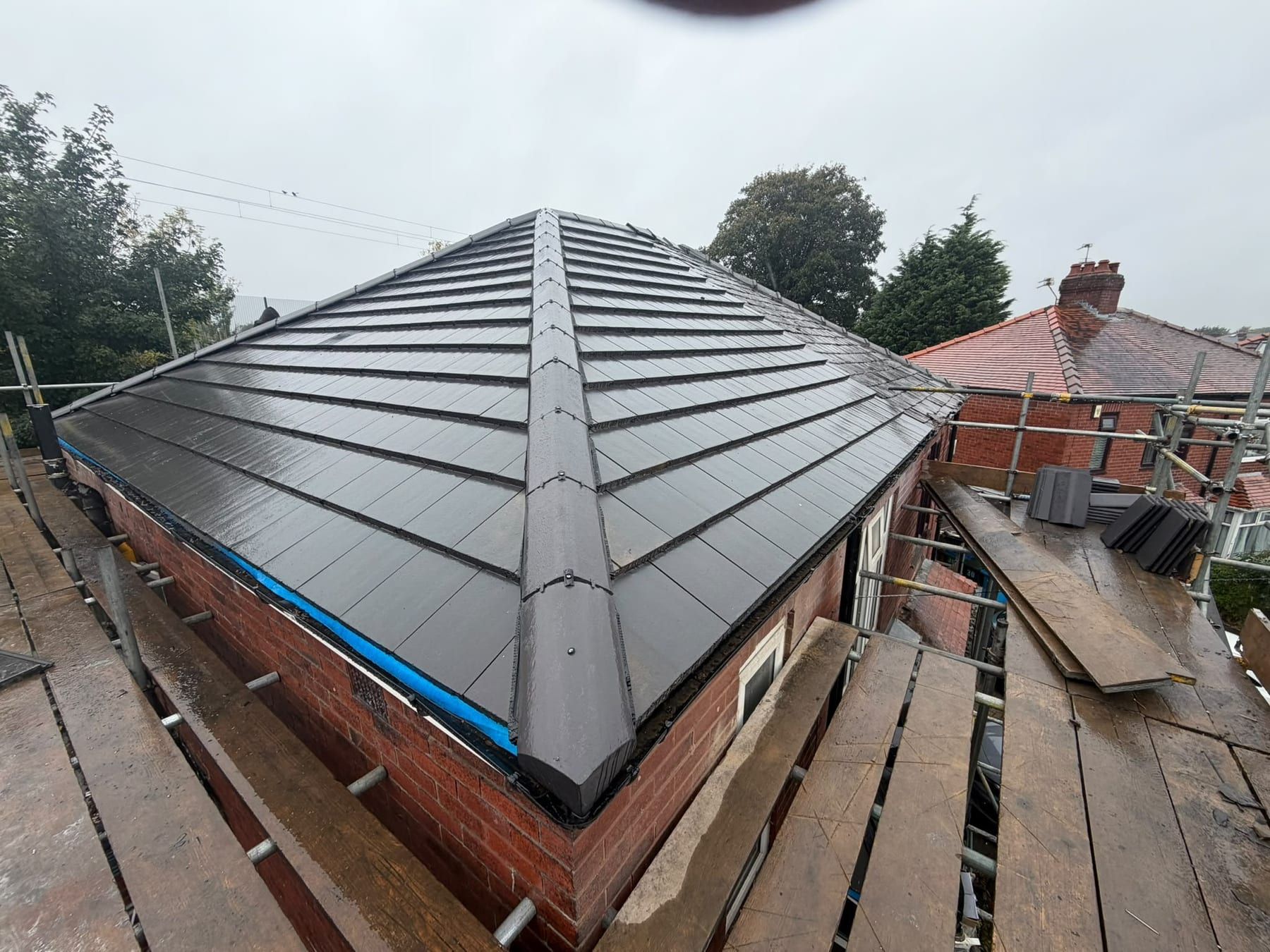
  7. Ridges, hips and edges. Ridges and hips are fixed with a dry fix system, which does not rely on mortar that cracks and falls out. Verges, valleys and lead flashings are finished.
  8. Clear up. Old materials and debris are cleared away, and the roof is checked over before the scaffold comes down.

Choosing tiles or slates

Most of the roofs in Jon’s photos are interlocking concrete tiles in grey or red, a hard wearing choice for semis and bungalows. Older terraced houses across Manchester, Salford and Bolton often have slate. Jon can talk you through what suits your house and your budget, and what will look right next to the neighbours.

Doing the rest of the roofline at the same time

With the scaffold already up, it is the sensible time to replace tired fascias and soffits and guttering, and to sort out chimney or lead work. It saves paying for access twice.

Regulations

Re-roofing is usually not something you need planning permission for if it looks the same, but more than a quarter of the roof is controlled work under the Building Regulations in England. Jon will tell you what applies to your roof.

The quote is free and there is no obligation. Call or WhatsApp Jon with a photo of the roof to get started.
Jobs like this

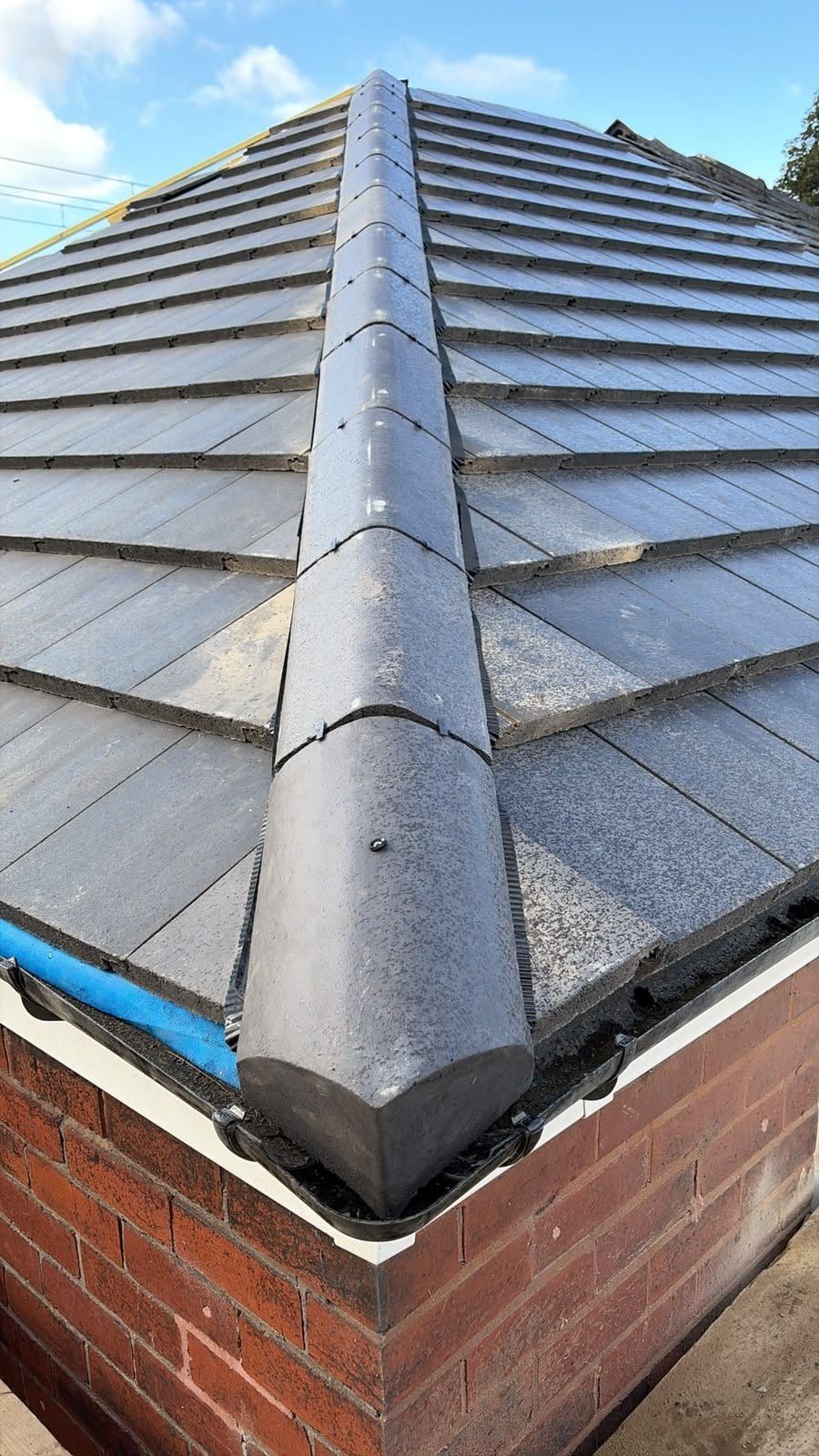
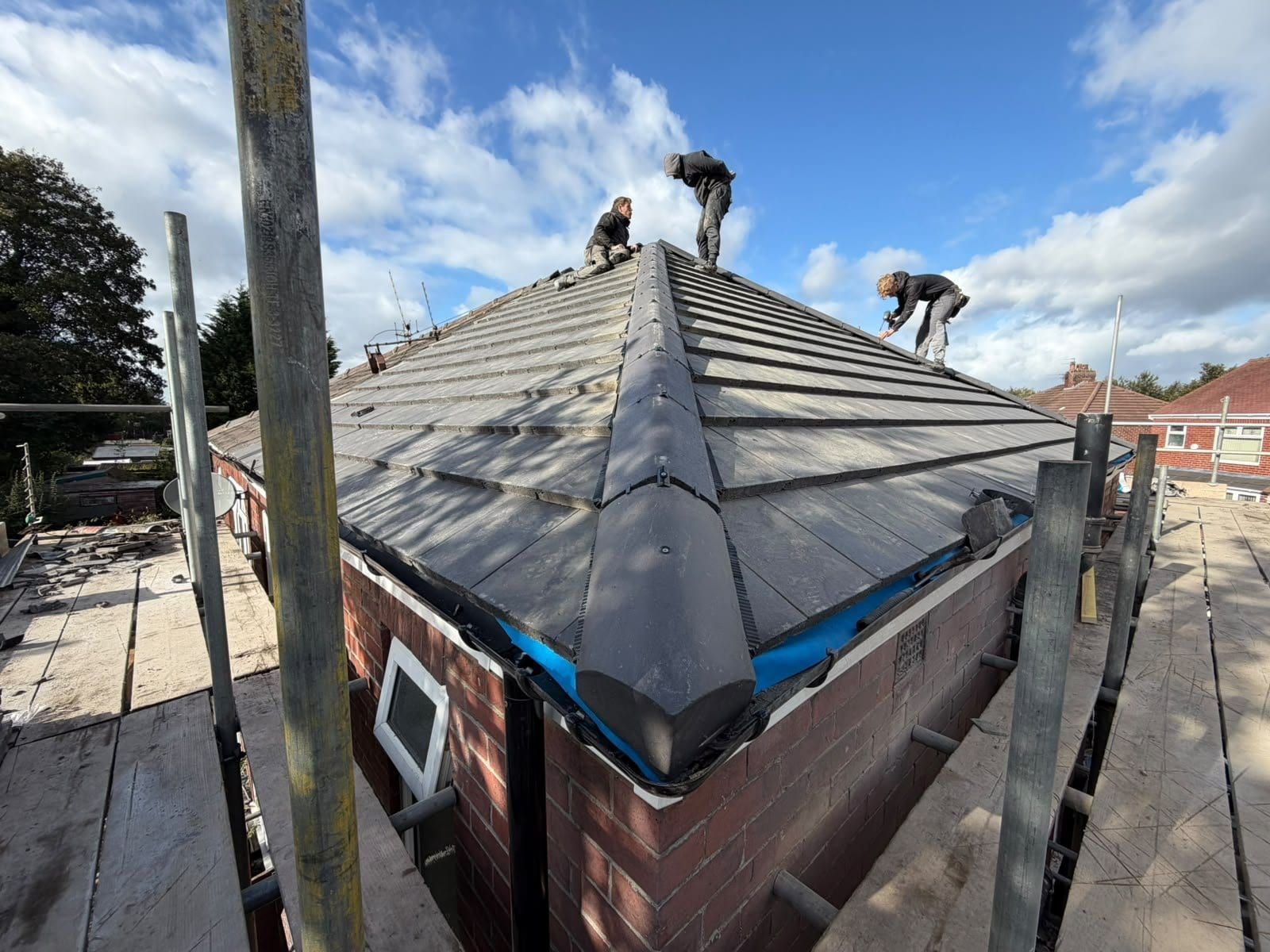
A bungalow with a new dark grey tiled hip roof and dry fixed ridge, with scaffolding round it
New hip roof on a bungalow
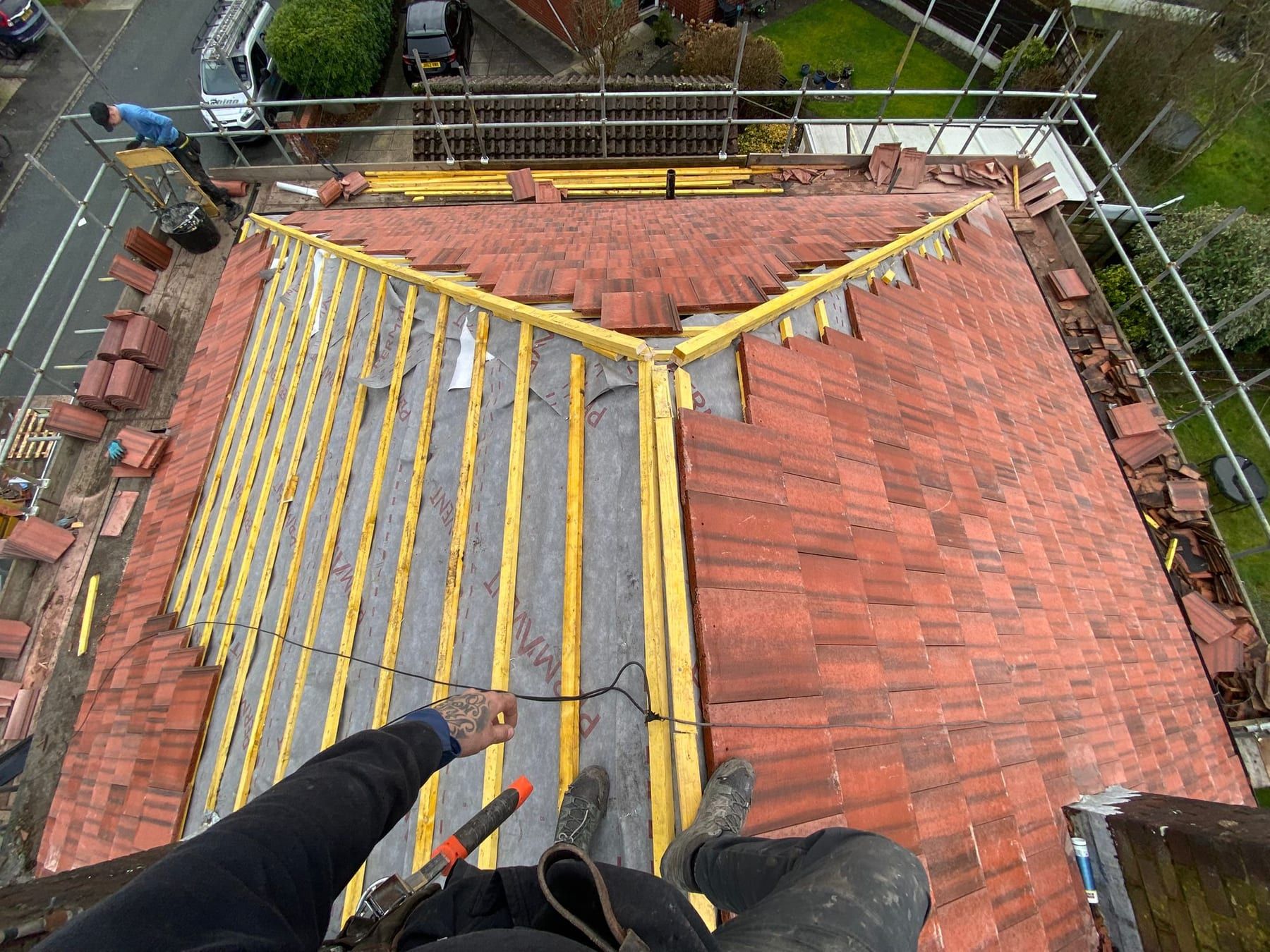
New dark grey tiles being laid up a hip roof over fresh timber battens, with the hip line still open
New tiles going on over fresh battens
A stripped hip roof covered in blue breathable membrane with new timber battens fixed across it
Breathable membrane and new battens
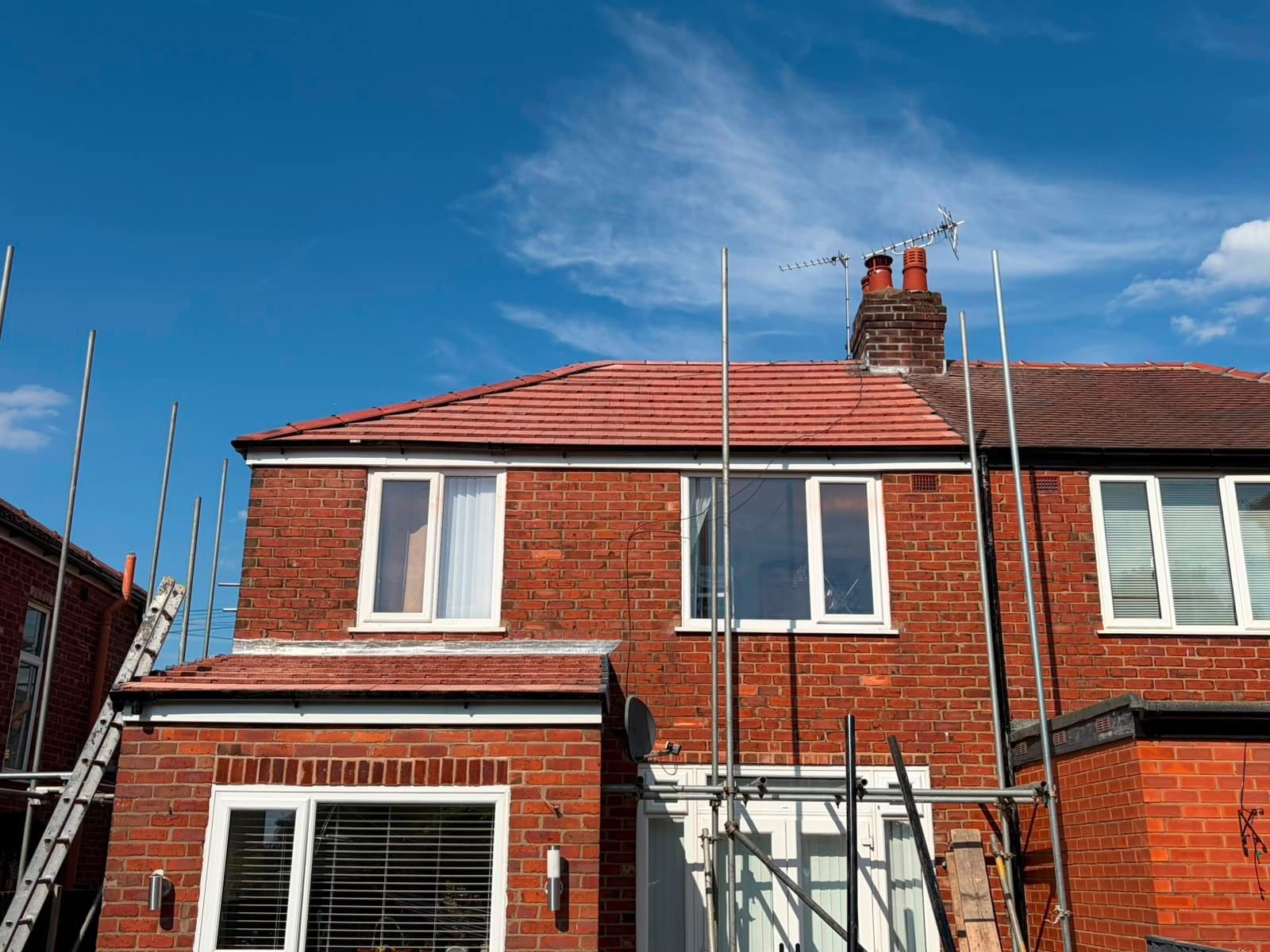
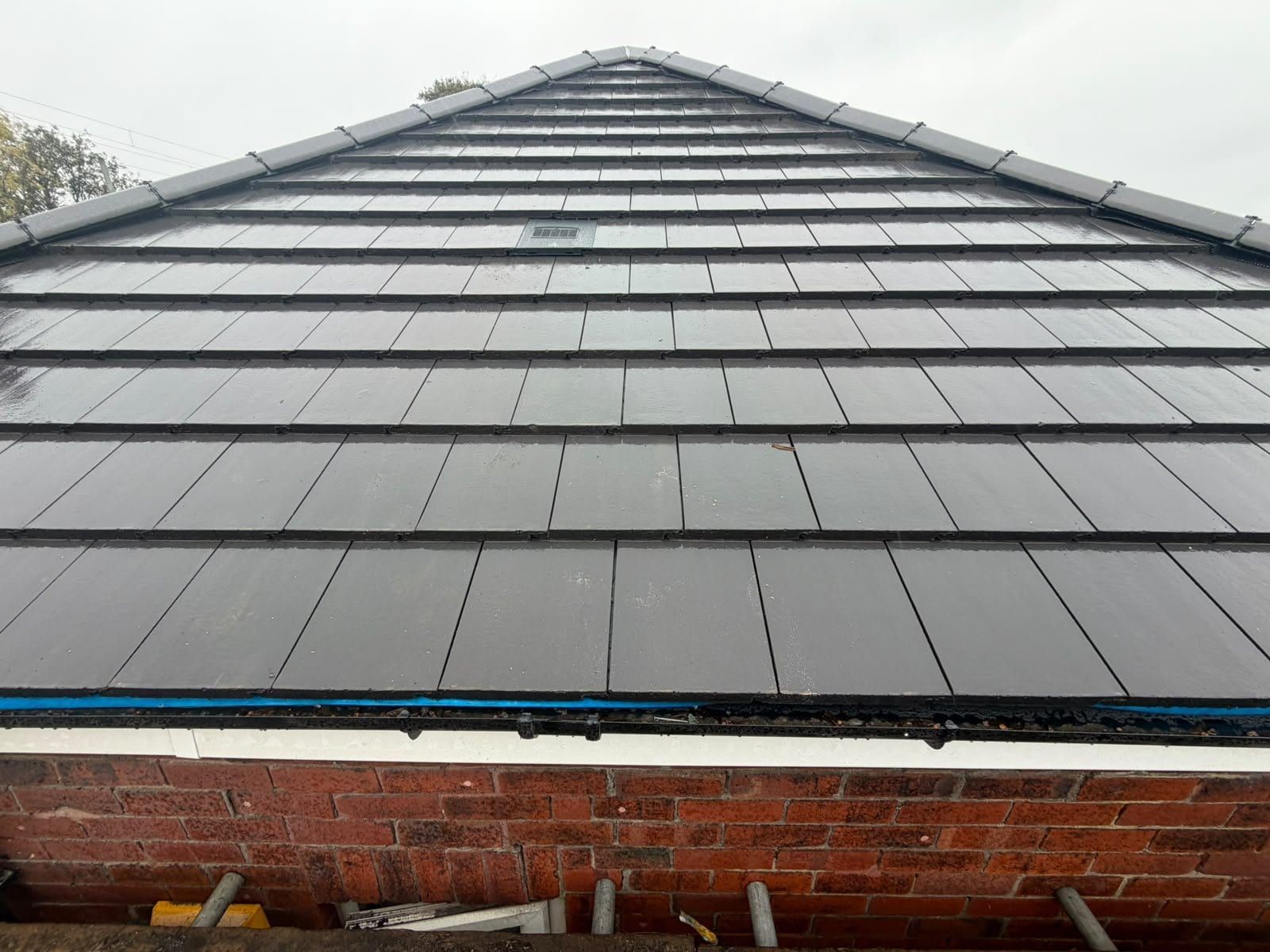
The back of a red brick semi-detached house with a new red tiled roof and scaffolding still in place
New red tiled roof on a semi
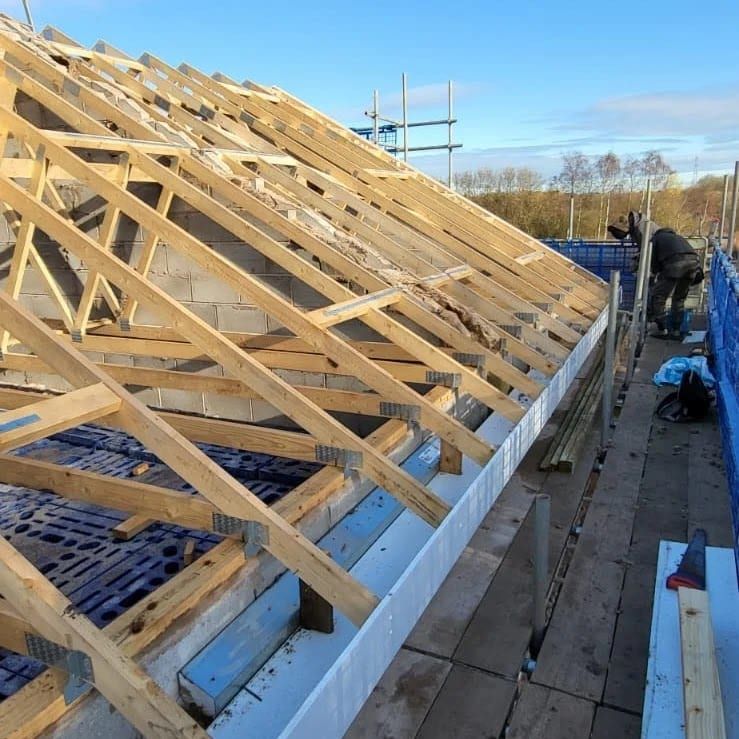
New timber roof trusses fixed along the top of a new building, with scaffold along the side
New timber roof trusses going up

New roofs: common questions

How long does a new roof take?

It depends on the size and shape of the roof, the weather and what is found when the old covering comes off. A typical house roof takes days rather than weeks. Jon gives you a rough timescale with the quote.

Do I need planning permission for a new roof?

Usually not if you are replacing like for like. If you live in a listed building or a conservation area, or want to change the look of the roof a lot, check with your council first.

Does a re-roof need building regulations approval?

In England, replacing more than a quarter of a roof's covering is controlled work under the Building Regulations, and the roof may need extra insulation where it is practical. Jon will explain what applies to your roof when he quotes.

Can I stay in the house while the roof is done?

Yes, almost always. The roof is opened up one section at a time and covered at the end of each day, so the house stays watertight while the work is under way.

How much does a new roof cost?

It depends on the size and pitch of the roof, the tiles or slates you choose, the state of the timbers underneath, scaffolding, and extras such as new fascias and guttering. Jon gives a free quote after he has seen it.

Tell Jon what your roof needs

Call, WhatsApp or send the form. A photo of the problem helps. Quotes are free and there is no obligation.

  • Open 24 hours, 7 days a week. Call any time, or message and Jon will get back to you.
  • [email protected]

Get a free quote

Pick the job and leave your number. Jon will get back to you as soon as he can.

What do you need?

Free and no obligation. Your details are only used to reply. Privacy